 EN
EN



Choosing the right custom t shirt print technique is a critical decision that directly impacts both your production costs and final product quality. Whether you're launching a streetwear brand, running a promotional campaign, or creating merchandise for an event, understanding how different printing methods align with your budget constraints can make the difference between profitable operations and financial strain. The landscape of custom t shirt print technologies has expanded dramatically, offering options from traditional screen printing to modern direct-to-garment methods, each with distinct cost structures, minimum order requirements, and quality characteristics that suit different business models and budget levels.
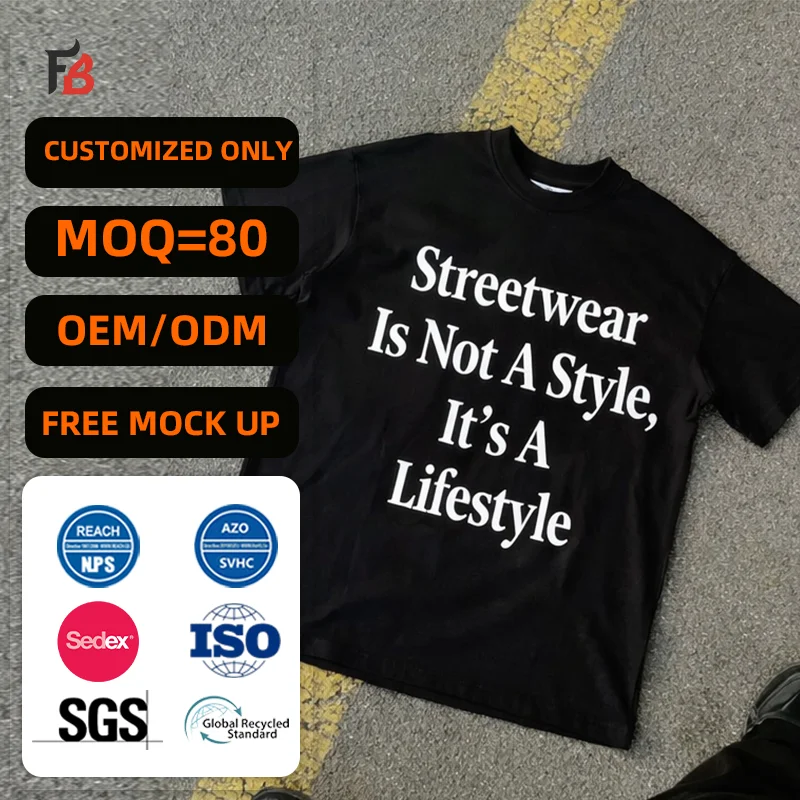
Budget considerations extend far beyond the per-unit printing cost. When evaluating custom t shirt print options, you must account for setup fees, minimum order quantities, design complexity limitations, turnaround times, and long-term scalability. A printing method that seems economical for small runs might become prohibitively expensive at scale, while techniques that require substantial upfront investment can deliver exceptional per-unit economics for large orders. This comprehensive guide examines the financial implications of each major printing technique, providing actionable decision frameworks that align printing technology choices with specific budget scenarios, order volumes, and quality expectations to help you maximize value without compromising your brand standards.
Understanding Cost Structures Across Custom T Shirt Print Methods
Fixed Costs Versus Variable Costs in Printing Economics
The economics of custom t shirt print techniques fundamentally divide into fixed and variable cost components. Fixed costs include setup fees, screen preparation, color separation, and initial equipment or service charges that remain constant regardless of order quantity. Variable costs encompass per-unit material expenses, ink consumption, labor per garment, and quality control time. Screen printing typically carries high fixed costs due to screen creation but offers minimal variable costs per shirt once setup is complete, making it exceptionally economical for orders exceeding 50-100 units. Conversely, direct-to-garment printing eliminates most setup expenses but maintains higher per-unit costs due to specialized ink requirements and individual garment processing time.
Understanding this cost structure dynamic is essential for budget alignment. If you're ordering 500 identical shirts, the fixed costs of screen printing spread across each unit become negligible, potentially reducing your per-shirt cost to two or three dollars. However, for a 12-shirt order with the same design, those same fixed costs might push your per-unit expense above fifteen dollars. Digital custom t shirt print methods like DTG reverse this equation, maintaining consistent per-unit pricing whether you order one shirt or one hundred, making them ideal for small batches, sampling, or businesses testing designs before committing to larger production runs.
Break-Even Analysis for Different Order Volumes
Calculating break-even points between printing methods requires comparing total project costs at various quantities. For a single-color design, screen printing might cost 150 dollars in setup fees plus 3 dollars per shirt, while DTG printing costs zero setup but 8 dollars per shirt. The break-even point occurs at 30 units where both methods cost 240 dollars total. Below 30 shirts, DTG proves more economical; above 30 units, screen printing delivers better value. This calculation becomes more complex with multi-color designs, where screen printing adds 40-60 dollars per additional color in setup costs, while DTG maintains consistent pricing regardless of color count.
Budget-conscious buyers should create simple break-even models before committing to a custom t shirt print method. Consider a four-color design scenario where screen printing requires 300 dollars setup plus 4 dollars per unit, compared to DTG at 10 dollars per unit with no setup. The break-even point shifts to 50 units. If your typical order size is 25 shirts, DTG costs 250 dollars versus screen printing at 400 dollars, saving 150 dollars per order. However, if you consistently order 100 units, screen printing totals 700 dollars while DTG reaches 1,000 dollars, making screen printing the superior budget choice despite higher upfront investment.
Hidden Costs That Impact Your True Budget
Beyond quoted printing prices, several hidden costs affect your actual custom t shirt print budget. Rush fees for expedited production can add 20-50 percent to base costs when tight deadlines demand priority processing. Design revision charges accumulate when artwork requires multiple adjustments to meet technical specifications for specific printing methods. Sampling costs, while seemingly minor at 20-40 dollars per prototype, multiply quickly when testing different fabric weights, colors, or print placements before approving full production.
Shipping and handling represent another frequently underestimated expense category. Domestic shipping for 100 custom t shirt print items might add 25-50 dollars, while international orders can incur 100-300 dollars in freight costs plus potential customs duties. Minimum order requirements force some budget-constrained buyers to purchase more inventory than immediately needed, tying up capital and creating storage costs. Quality issues requiring reprints or refunds can devastate tight budgets, making supplier reliability and quality assurance protocols critical financial considerations beyond the base printing price.
Matching Printing Techniques to Specific Budget Scenarios
Screen Printing for Volume-Based Budget Efficiency
Screen printing remains the gold standard for budget efficiency when order volumes justify the setup investment. This custom t shirt print method excels for orders exceeding 50-100 units with simple to moderately complex designs using six or fewer colors. The technique involves creating mesh screens for each color layer, then pressing ink through these screens onto garments in sequential passes. Initial setup costs range from 15-60 dollars per screen depending on design complexity and mesh specifications, but these costs amortize across all produced units.
For budget-focused businesses with predictable, recurring orders, screen printing offers unmatched per-unit economics. A standard one-color custom t shirt print on 100 units might cost 350-450 dollars total including setup, averaging 3.50-4.50 dollars per shirt. Scaling to 500 units might increase total costs to only 1,750-2,000 dollars, reducing per-unit costs to 3.50-4.00 dollars. This scalability makes screen printing ideal for established brands, corporate uniform programs, event merchandise with confirmed attendance numbers, and any application where design consistency across large quantities justifies the upfront screen investment.
Direct-to-Garment Printing for Small Budget Flexibility
Direct-to-garment technology revolutionized custom t shirt print accessibility for budget-conscious startups and small orders. DTG printers function similarly to desktop inkjet printers, applying water-based inks directly onto fabric through precision print heads. With zero setup costs and no minimum order requirements, DTG enables economical production of single units or small batches. Per-unit costs typically range from 8-15 dollars depending on design size, color complexity, and garment quality, with full-color photographic prints costing the same as simple text designs.
This pricing structure proves ideal for businesses testing market response before committing to inventory, print-on-demand operations fulfilling individual customer orders, or limited edition releases where exclusivity justifies premium per-unit costs. A 20-shirt order with complex, full-color artwork might cost 200-280 dollars via DTG but 450-600 dollars through screen printing once setup fees are included. DTG also eliminates inventory risk, allowing brands to produce only sold items rather than speculating on demand. However, for orders exceeding 50-75 units, the higher per-unit DTG costs eventually surpass screen printing's total expense despite setup savings.
Heat Transfer and Vinyl Cutting for Ultra-Low Budgets
Heat transfer and vinyl cutting methods serve extremely budget-limited scenarios or highly personalized custom t shirt print applications. Heat transfer paper allows printing designs on standard inkjet or laser printers, then transferring images to fabric using heat presses. Material costs remain minimal at 1-3 dollars per transfer sheet, with small heat presses available for 150-300 dollars, enabling home-based or micro-business production. However, heat transfers often exhibit limited wash durability and can produce a plastic, raised surface texture that feels less professional than other methods.
Vinyl cutting excels for simple text, numbers, logos, and single-color designs requiring professional appearance on minimal budgets. Desktop vinyl cutters cost 200-500 dollars, with heat transfer vinyl material running 2-5 dollars per shirt depending on design size. This custom t shirt print approach works well for sports team names and numbers, basic branded apparel, or personalization services. Setup time per design remains minimal since vinyl cutters use digital files without screen creation, making them efficient for high-variety, low-volume production. Budget-conscious entrepreneurs often start with vinyl cutting or heat transfers before graduating to screen printing or DTG as order volumes justify more sophisticated equipment investment.
Design Complexity and Its Impact on Budget Selection
Color Count and Printing Cost Relationships
Design color count dramatically influences custom t shirt print budgeting decisions. Screen printing costs escalate with each additional color since every hue requires a separate screen, setup, and printing pass. A one-color design might cost 25 dollars in setup, while a four-color design jumps to 120-180 dollars before printing a single shirt. This cost structure favors simple, bold designs with limited color palettes for budget-conscious screen printing applications. Conversely, DTG and sublimation printing maintain consistent pricing regardless of color complexity since these digital methods reproduce full-color images without per-color surcharges.
Budget optimization often requires design adaptation to suit economical printing methods. A logo with six distinct colors might be simplified to three strategic colors for screen printing, reducing setup costs by 90-120 dollars while maintaining brand recognition. Alternatively, gradient effects, photographic elements, and unlimited color designs justify choosing custom t shirt print methods like DTG that don't penalize color complexity. Understanding these relationships allows designers to create artwork that achieves visual impact while respecting budget constraints through informed method selection.
Print Size and Coverage Area Considerations
Print size and coverage area directly affect material costs and production time across all custom t shirt print techniques. Screen printing ink consumption increases proportionally with design size, though this remains a minor cost factor compared to setup fees. DTG printing shows more pronounced cost sensitivity to print size since larger designs require more ink and extended printing time. A small chest logo might cost 7 dollars to print via DTG, while a full-front design covering 12x16 inches could reach 12-15 dollars due to increased ink usage and processing time.
Budget-conscious design approaches maximize visual impact within economical print dimensions. Standard sizing categories include small chest prints up to 4x4 inches, medium front prints at 8x10 inches, and large full-front designs reaching 12x14 inches or larger. Each size category carries distinct pricing tiers across printing methods. Strategic placement choices like left chest positioning or sleeve prints utilize smaller surface areas that reduce costs while maintaining professional appearance. For custom t shirt print projects with tight budgets, designs optimized for 8x10 inch front placement balance visibility with cost efficiency across most printing techniques.
Detail Resolution and Technical Requirements
Design detail levels and technical complexity influence both printing method suitability and budget implications. Screen printing excels with bold graphics, solid colors, and designs with clear edge definition, but struggles with fine details below 1-2 millimeters, subtle gradients, and photographic realism. Achieving fine detail through screen printing requires higher mesh counts and specialized techniques that increase setup costs. DTG printing handles intricate details, smooth gradients, and photographic images without additional charges, making it cost-effective for complex artwork despite higher per-unit prices.
Budget decisions should account for design-method compatibility to avoid costly technical complications. A design with extremely fine text below 6-point size or subtle color transitions might require DTG printing to reproduce accurately, eliminating screen printing as a budget option regardless of order volume. Conversely, designs featuring large solid color blocks and minimal detail work efficiently with screen printing's economical volume pricing. Evaluating technical design requirements during the planning phase prevents budget overruns caused by discovering mid-project that chosen custom t shirt print methods cannot adequately reproduce artwork, forcing expensive method changes or design revisions.
Long-Term Budget Planning and Scalability Considerations
Equipment Investment Versus Outsourcing Economics
Long-term budget strategies must evaluate whether investing in custom t shirt print equipment or outsourcing to contract printers delivers better economics. Entry-level DTG printers cost 10,000-20,000 dollars, while professional screen printing setups range from 5,000-15,000 dollars depending on automation levels. These capital investments make sense when production volumes reach thresholds where cumulative outsourcing costs exceed equipment expense plus operating costs. A business ordering 200 DTG-printed shirts monthly at 10 dollars per unit spends 24,000 dollars annually, potentially justifying equipment purchase if internal production costs drop to 4-6 dollars per shirt.
However, equipment ownership introduces operational expenses beyond initial purchase prices. Maintenance, ink and supply costs, facility space, labor, and technical expertise requirements add ongoing budget burdens. Screen printing demands physical space for equipment, drying racks, and inventory storage. DTG printers require climate-controlled environments, regular maintenance, and specialized pretreatment solutions. For businesses with fluctuating demand or diverse custom t shirt print needs across multiple techniques, outsourcing maintains budget flexibility without capital commitment, allowing method selection optimization for each project's specific volume and design characteristics.
Volume Growth Patterns and Method Migration Strategies
Successful custom t shirt print businesses often begin with one technique then migrate to others as volume patterns emerge. Startups typically launch with DTG or vinyl cutting for budget-friendly small-batch flexibility, accepting higher per-unit costs to minimize upfront investment and inventory risk. As specific designs prove popular and reorder patterns develop, transitioning these high-volume items to screen printing dramatically improves margins while maintaining DTG capabilities for new designs and limited runs.
This hybrid approach optimizes budget efficiency across product lifecycles. New designs launch via DTG with zero setup costs and minimal inventory commitment. Once a design sells 50-100 units, screen printing becomes economical for restock orders. A shirt that costs 12 dollars to produce via DTG drops to 4-5 dollars through screen printing at volume, improving profit margins by 7-8 dollars per unit. Budget planning should anticipate this methodology migration, allocating resources for screen setup on proven sellers while preserving DTG flexibility for experimental products. This strategy balances innovation capacity with production efficiency as your custom t shirt print business scales.
Seasonal Demand and Budget Allocation Timing
Many custom t shirt print applications exhibit pronounced seasonal demand patterns that influence budget allocation timing. Event merchandise, summer promotional campaigns, and holiday-themed apparel create peak ordering periods where production capacity tightens and rush fees become common. Budget-conscious planning involves advancing orders before peak seasons, securing standard turnaround pricing rather than paying premium rates for expedited production during high-demand windows.
Seasonal budget strategies also leverage off-peak discounts many contract printers offer during slower periods. Winter months often see reduced demand for custom t shirt print services, prompting suppliers to offer 10-20 percent discounts on standard pricing to maintain production flow. Businesses with flexible timing can significantly reduce costs by placing large orders during these promotional periods. Additionally, planning annual needs in advance enables consolidated ordering that achieves volume-based pricing tiers. Rather than ordering 100 shirts quarterly at mid-tier pricing, a single 400-unit annual order might qualify for premium volume discounts that reduce per-unit costs by 15-25 percent, substantially impacting overall budget efficiency.
Quality Trade-offs Within Budget Constraints
Durability and Wash Performance Across Price Points
Budget decisions inevitably involve quality trade-offs, particularly regarding print durability and wash longevity. Premium custom t shirt print techniques using specialized inks and curing processes deliver 50-100 wash cycles with minimal fading, while economy approaches might show degradation after 15-20 washes. Screen printing with plastisol inks provides excellent durability at moderate costs, while water-based screen printing inks offer superior softness and breathability but require careful curing to achieve comparable longevity.
DTG printing quality varies significantly based on equipment quality, ink formulations, and pretreatment processes. Professional DTG services producing custom t shirt print products for retail applications invest in premium inks and thorough pretreatment protocols that ensure 40-60 wash durability, while budget DTG operations cutting costs through minimal pretreatment or economy inks may deliver prints that fade or crack within 10-15 washes. Understanding these quality-cost relationships helps set appropriate customer expectations and avoid reputation damage from premature product failure. For promotional items with short-term use expectations, economy methods suffice, while branded retail apparel demands durability investments that justify premium pricing.
Fabric Selection and Print Compatibility Economics
Fabric choice significantly impacts both printing costs and final product quality within budget frameworks. DTG printing performs optimally on 100-percent cotton fabrics, producing vibrant colors and excellent detail. Polyester and poly-cotton blends require specialized DTG inks or alternative printing methods, potentially increasing costs. Screen printing adapts more readily across fabric types but achieves best results on smooth, medium-weight textiles. Budget-grade fabrics with rough textures or inconsistent weaves create printing challenges that reduce quality or require additional processing steps that inflate costs.
Strategic fabric selection balances garment cost against printing performance. A premium 6-ounce cotton shirt costing 4 dollars wholesale produces superior custom t shirt print results compared to a 2-dollar economy 4-ounce shirt with inconsistent weave. However, the final product quality difference might not justify the doubled garment cost for certain applications. Budget optimization requires matching fabric quality to use case expectations and printing method requirements. Corporate uniforms worn and washed frequently warrant fabric investment, while single-use event shirts may accept economy textiles. Understanding these compatibility relationships prevents wasted printing costs on fabrics that cannot showcase technique capabilities.
Color Accuracy and Consistency Standards
Color matching accuracy represents another quality dimension affected by budget choices. Pantone color matching and color consistency across production runs require calibrated equipment, premium inks, and rigorous quality control processes that increase custom t shirt print costs. Budget printing services often produce acceptable colors without precise matching, resulting in variations between batches or slight differences from provided design files. For many applications, these variations remain acceptable, but brand-critical colors or products requiring exact color matching across multiple production runs justify premium pricing.
Screen printing with Pantone-matched plastisol inks delivers excellent color consistency at reasonable costs once proper ink formulations are established. DTG printing color accuracy depends on printer calibration, garment pretreatment consistency, and environmental factors like humidity. Budget DTG services may skip regular calibration and profiling procedures that ensure accurate color reproduction. Businesses requiring precise brand color representation should specify color matching requirements and verify sample approval processes before committing to custom t shirt print orders. While this adds modest costs, it prevents expensive reprints and protects brand integrity.
FAQ
What is the most economical custom t shirt print method for orders under 25 units?
Direct-to-garment printing typically offers the best value for orders under 25 units because it eliminates setup fees entirely while maintaining reasonable per-unit costs between 8-15 dollars depending on design complexity. Screen printing becomes prohibitively expensive at this volume due to setup costs that often exceed 100-200 dollars before printing a single shirt, pushing per-unit costs well above DTG pricing. Heat transfer vinyl provides an alternative for extremely simple designs with minimal colors, offering even lower costs for basic text or logo applications, though with some quality limitations compared to DTG.
How does design complexity affect the break-even point between printing methods?
Design complexity dramatically shifts break-even calculations between custom t shirt print methods. Simple one or two-color designs favor screen printing at relatively low volumes, potentially becoming economical around 30-50 units. However, designs with four or more colors significantly increase screen printing setup costs, pushing break-even points to 75-100 units or higher. Meanwhile, DTG maintains consistent pricing regardless of color count, making it increasingly advantageous for complex, multi-color designs even at moderate volumes. A four-color design might favor DTG up to 75 units, while the same quantity with a single-color design would be more economical via screen printing.
Can I reduce custom t shirt print costs by simplifying my design without losing brand impact?
Yes, strategic design simplification can substantially reduce printing costs while maintaining visual impact and brand recognition. Reducing color count from six to three colors can save 90-150 dollars in screen printing setup fees per order. Converting gradient backgrounds to solid colors, simplifying fine details to bolder elements, and reducing print size from full-front to standard chest placement all decrease costs across multiple printing methods. Working with experienced designers who understand printing economics helps identify simplification opportunities that preserve essential brand elements while optimizing for budget-friendly production methods. Many successful brands use simplified versions of complex logos specifically for economical apparel printing.
What hidden costs should I budget for beyond the quoted per-shirt printing price?
Beyond base printing costs, budget for setup fees ranging from 15-200 dollars depending on design complexity and method, shipping costs that might add 10-30 percent to small orders, potential rush fees of 20-50 percent for expedited production, and sampling costs of 20-50 dollars per prototype for design approval. Design revision charges can add 25-75 dollars if artwork requires multiple adjustments for print compatibility. Also consider minimum order requirements that might force purchasing more inventory than immediately needed, and potential reprint costs if quality issues occur. Comprehensive custom t shirt print budgeting should add 20-35 percent to base per-unit quotes to cover these ancillary expenses for realistic total project costs.
Table of Contents
- Understanding Cost Structures Across Custom T Shirt Print Methods
- Matching Printing Techniques to Specific Budget Scenarios
- Design Complexity and Its Impact on Budget Selection
- Long-Term Budget Planning and Scalability Considerations
- Quality Trade-offs Within Budget Constraints
-
FAQ
- What is the most economical custom t shirt print method for orders under 25 units?
- How does design complexity affect the break-even point between printing methods?
- Can I reduce custom t shirt print costs by simplifying my design without losing brand impact?
- What hidden costs should I budget for beyond the quoted per-shirt printing price?